Hot Line: 01990098900,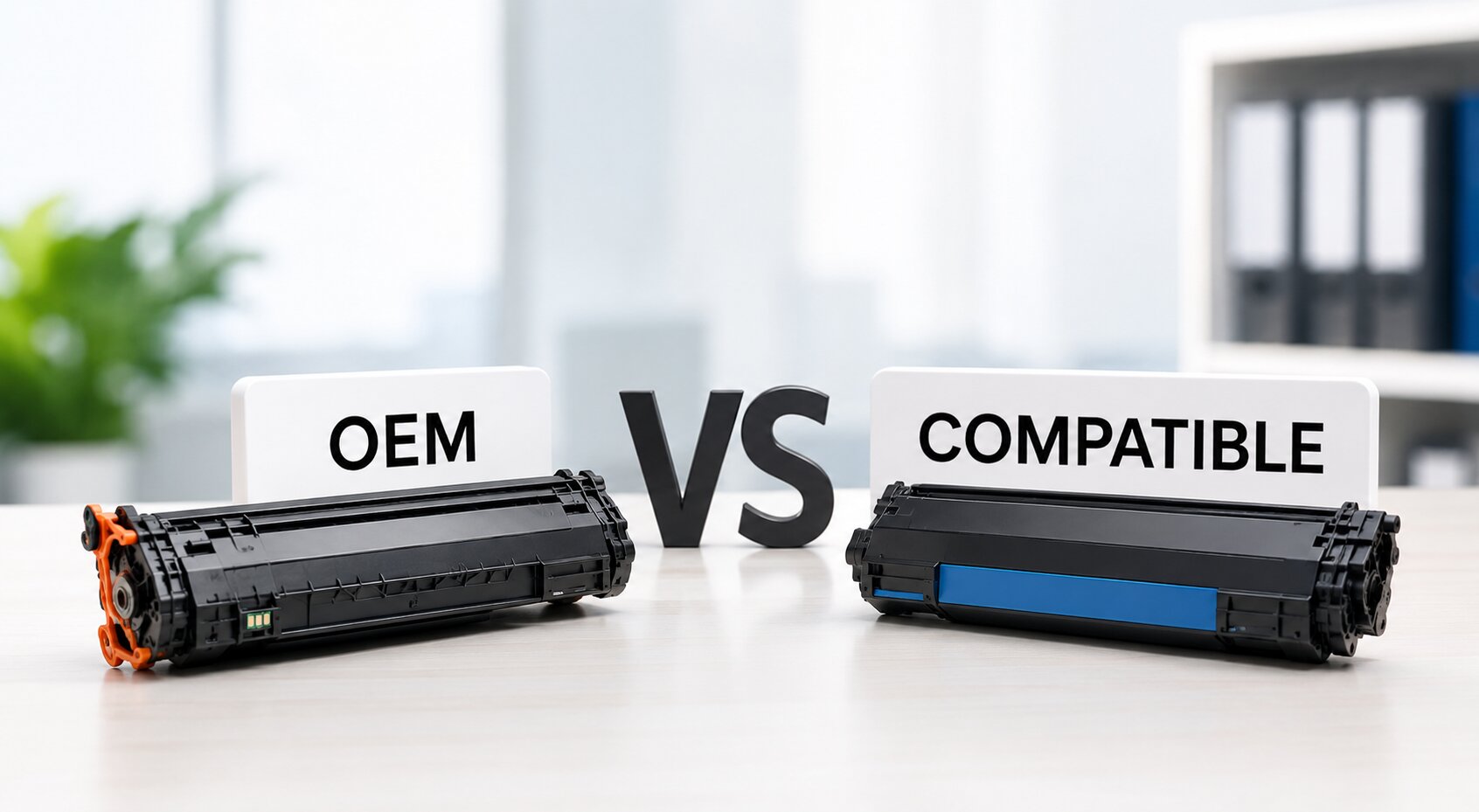
Printer toner users in Bangladesh, including offices and printing shops that produce tons of documents daily, and individuals who occasionally print, have all struggled with the same question – OEM or Compatible Toner?
Which toner cartridge is better for your printer? The answer is not a straightforward one. Multiple factors such as printing cost, print quality, page coverage, and printer health often put buyers in a dilemma.
In this blog, we make it easier to decide whether to buy OEM or Compatible toner cartridges through our in-depth comparison.
What Is an OEM Toner Cartridge?
OEM stands for Original Equipment Manufacturer. An OEM toner cartridge is manufactured by the same company that made your laser printer.
For example, an HP LaserJet printer uses genuine HP toner cartridges, while a Brother, Canon, Pantum, or Xerox printer has its own line of OEM toner cartridges designed specifically for that printer series.
OEM cartridges are developed alongside the printer itself.
The toner formulation, cartridge components, and internal chip are all engineered to work with the printer’s hardware and firmware. This synchronous design helps maintain consistent print quality and performance throughout the cartridge’s life.
OEM toners are comparatively more expensive.
Because they come directly from the printer manufacturer, OEM cartridges usually cost more than third-party alternatives. The higher price reflects the manufacturer’s research and development, quality control, warranty support, and brand value rather than just the amount of toner inside the cartridge.
Certain industries prefer OEM toner for their consistent print quality.
For law firms, banks, healthcare facilities, or corporate offices where every document needs to produce sharp and reliable results, OEM cartridges offer a high level of consistency that many organizations value.
That said, OEM cartridges are not automatically the best choice for every user.
Someone who prints lecture notes at home or runs a small office with a limited printing budget might evaluate the extra cost differently. This is where compatible toner cartridges enter the discussion.
What Is a Compatible Toner Cartridge?
A compatible toner cartridge is a brand-new cartridge manufactured by a third-party company rather than the original printer manufacturer. Although it’s not produced by HP, Brother, Canon, Pantum, Samsung, or other printer brands, it’s designed to fit specific printer models and function much like an OEM cartridge.
The key point is that a compatible cartridge is not a copied or reused OEM cartridge. Rather, it’s manufactured independently to meet the specifications of compatible printers.
For example, if you own an HP LaserJet Pro M404 that uses the HP 59A toner cartridge, several third-party manufacturers also produce compatible cartridges for that same printer model. The goal is to provide users with a more affordable replacement without requiring any modifications to the printer.
Compatible toners are the budget-friendly options.
One of the biggest reasons buyers choose compatible toner is cost. In many cases, a compatible cartridge costs considerably less than its OEM counterpart while offering a comparable page yield for everyday printing, significantly reducing the cost per page, especially for offices, educational institutions, and printing businesses with high monthly print volumes.
However, not all compatible cartridges are manufactured to the same standard. Their performance depends heavily on the manufacturer’s quality control, toner formulation, cartridge components, and testing process.
A well-manufactured compatible cartridge can produce crisp text and clear graphics for routine office documents. On the other hand, poorly manufactured cartridges can lead to faded prints, toner leakage, inconsistent print density, or premature cartridge failure.
This is why experienced buyers rarely judge compatible toner by price alone. They also consider the supplier’s reputation, warranty policy, customer reviews, and product consistency before making a purchase.
Compatible vs. Remanufactured vs. Counterfeit Toner
Sometimes people might think these three terms point to the same type of product. But that’s not the case. They’re very much different in design, performance, and price.
Understanding the distinction between compatible, remanufactured, and counterfeit toners helps you compare cartridges correctly and avoid buying something you didn’t intend to purchase.
Compatible Toner
A compatible toner cartridge is newly manufactured by a third-party company. It’s built to work with a specific printer model but is not produced by the original printer brand.
Its purpose is to provide an alternative to OEM cartridges at a lower price while maintaining acceptable print quality and reliability.
Remanufactured Toner
A remanufactured cartridge starts as an original OEM cartridge that has already been used. The empty cartridge is collected, cleaned, inspected, repaired where necessary, refilled with new toner, and tested before being sold again.
Since it reuses the original cartridge shell, remanufactured toner is often considered a more environmentally friendly option because it helps reduce electronic waste.
Nonetheless, its performance largely depends on the remanufacturer’s refurbishment process. A properly remanufactured cartridge can perform well, while one that has been poorly refurbished may experience issues over time.
Counterfeit Toner
Counterfeit toner is entirely different from both compatible and remanufactured cartridges.
These products are illegally manufactured and intentionally packaged to resemble genuine OEM cartridges. Some unlicensed vendors even copy the original brand’s logo, packaging, labels, or security features to mislead buyers.
Besides violating intellectual property rights, counterfeit cartridges are infamous for their inconsistent, poor print quality, toner leakage, and printer-damaging flaws.
Find Out: Is China Toner Safe for Your Laser Printer?
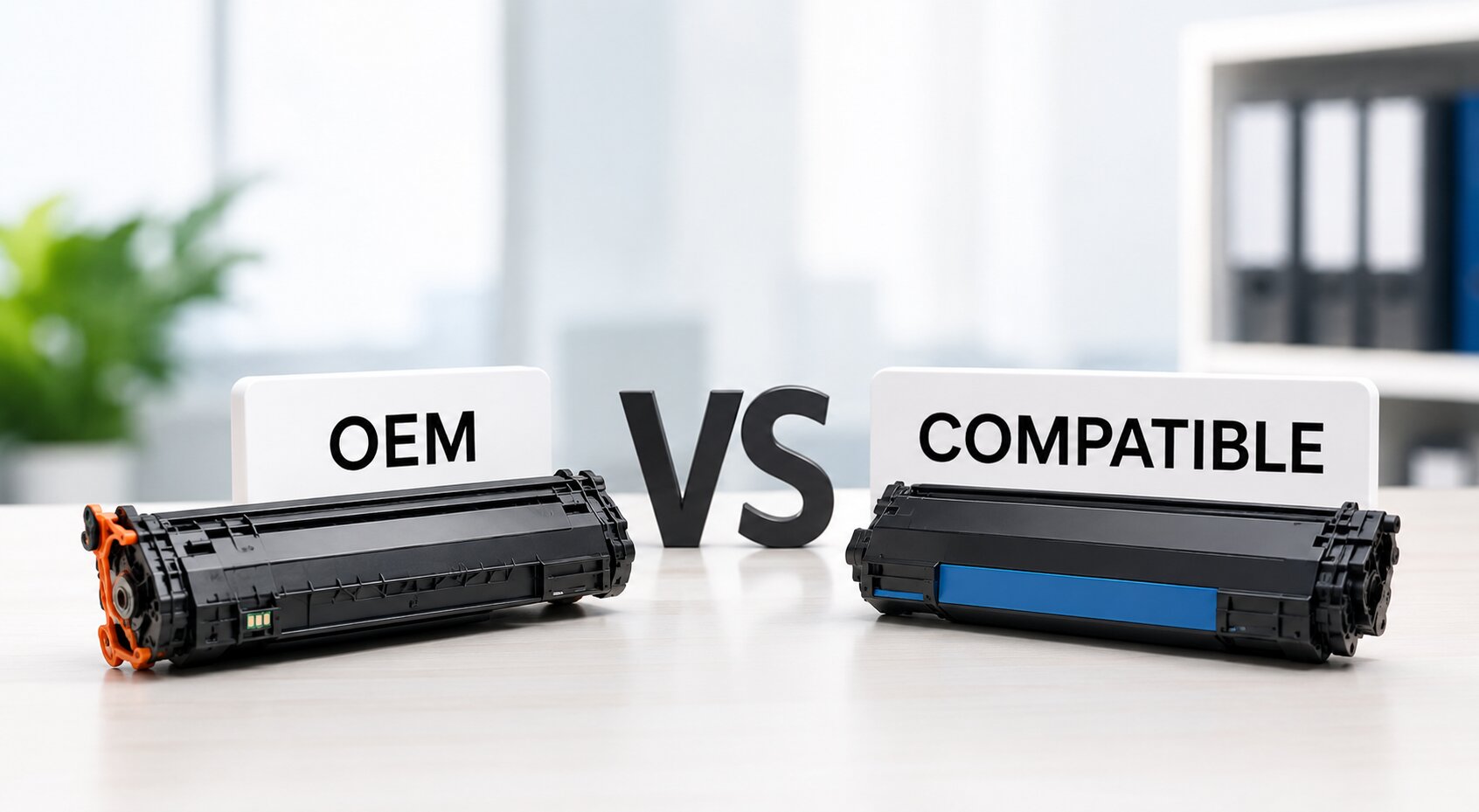
OEM vs. Compatible Toner: Comparison Table
The table below summarizes the major differences between OEM and compatible toner cartridges:
| Feature | OEM Toner | Compatible Toner |
| Manufacturer | Original printer manufacturer such as HP, Brother, Canon, or Pantum | Independent third-party manufacturer |
| Price | Generally more expensive | Comparatively more affordable |
| Print Quality | Consistently high and predictable | Varies by manufacturer; reputable brands can produce excellent everyday results |
| Page Yield | Based on manufacturer specifications and ISO testing | Often comparable, but depends on product quality and testing standards |
| Reliability | Consistent across batches | Depends on manufacturing quality and quality control |
| Printer Compatibility | Designed specifically for the printer model | Designed to work with compatible printer models |
| Warranty Support | Backed by the printer manufacturer’s warranty and support | Warranty depends on the cartridge manufacturer or seller |
| Availability in Bangladesh | Available through authorized dealers and retailers | Widely available from online and offline toner suppliers |
| Best Suited For | Businesses requiring maximum consistency and manufacturer support | Users looking to reduce printing costs without compromising everyday printing needs |
If your priority is predictable performance, manufacturer-backed support, and consistent output, OEM cartridges naturally have an advantage.
On the other hand, if reducing operating costs is more important and you buy from a reputable supplier in Bangladesh like MTECH, a quality compatible toner cartridge can offer excellent value for everyday printing.
Is OEM Worth Paying More?
Price is the biggest factor for many buyers when choosing between OEM and compatible toner cartridges.
OEM toner’s price includes the manufacturer’s research, product development, quality assurance, and after-sales support, cumulating into a hefty amount.
Compatible toner cartridges, on the other hand, are generally available at a lower price. Since third-party manufacturers don’t carry the same brand costs, they can offer cartridges with similar page yields at a more competitive price.
But the purchase price isn’t all to consider.
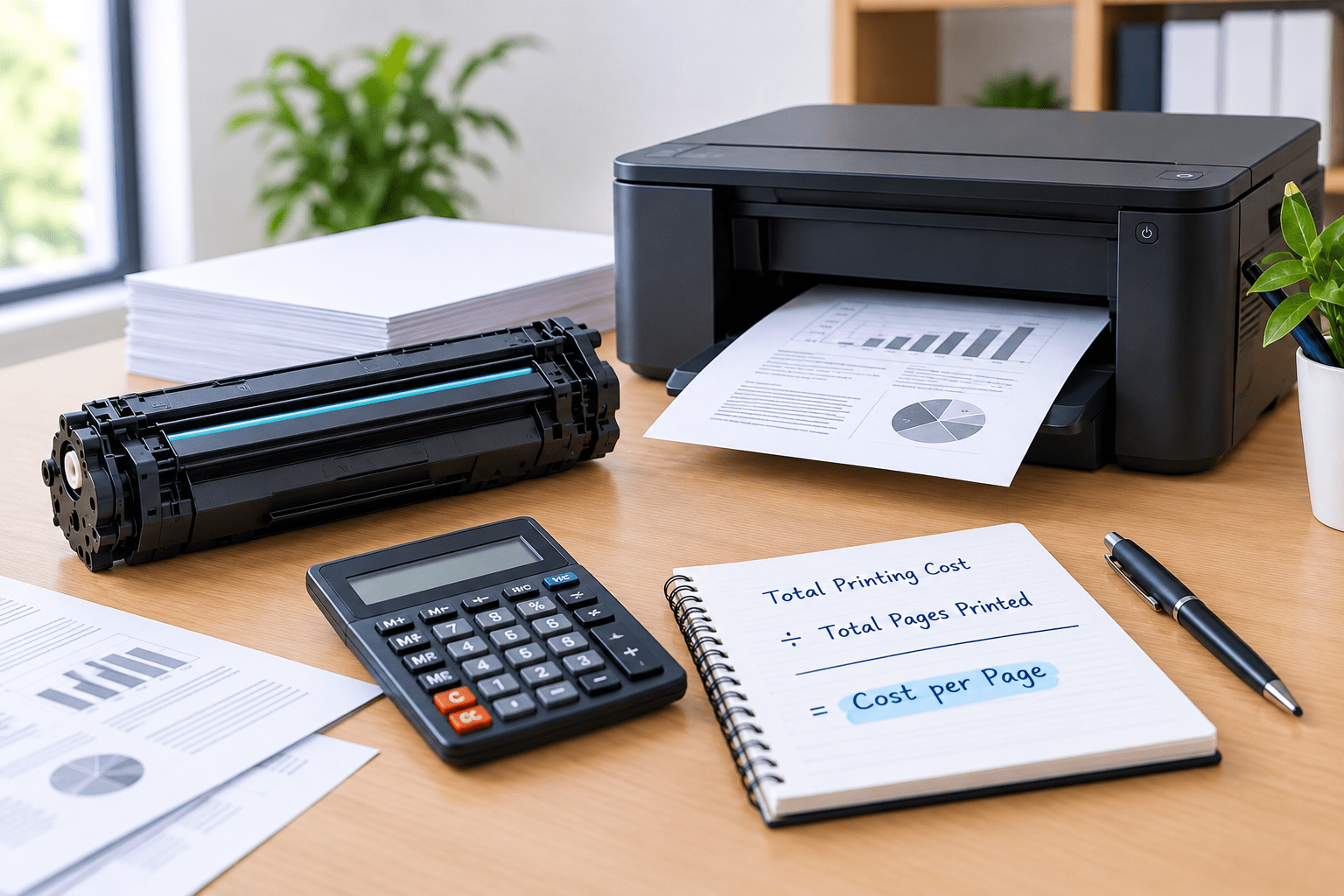
A better way to compare cartridges is by considering the cost per page.
Let’s take two toner cartridges:
Cartridge A costs BDT 8,000 and prints approximately 3,000 pages.
Cartridge B costs BDT 4,500 and also prints around 3,000 pages.
Even though both produce a similar number of pages under ISO/IEC page yield testing conditions, Cartridge B costs considerably less for each printed page.
This calculation is particularly important for businesses with high monthly print volumes. Schools, coaching centers, accounting firms, courier companies, government offices, and printing shops usually replace toner cartridges several times a month. Over a year, even a small reduction in cost per page can result in huge savings.
But this saving might not mean anything if the low-cost cartridge produces inconsistent results, requires frequent replacements, or causes printing interruptions.
A better question for toner cartridge buyers would be, “Which cartridge offers better value for the way I print?”
Find Out: 25 Practical Ways to Save Money on Printing Costs
Print Quality Difference between OEM and Compatible Toners
Compatible toner cartridges vary more in quality since they are produced by different manufacturers. A reputable manufacturer invests in quality toner powder, durable cartridge components, and rigorous testing. These cartridges can produce crisp black text and clean graphics that are difficult to distinguish from OEM output.
Lower-quality cartridges, however, are more prone to produce lighter prints, uneven toner coverage, background shading, or inconsistent image density.
If you’re mainly printing invoices, office documents, drafts, outlines, internal reports, shipping labels, assignments, etc., a quality compatible toner will suffice.
However, if your work involves presentation materials, detailed graphics, architectural drawings, or color-sensitive business documents, OEM cartridges are a better choice.
The Page Yield Factor
Page Yield refers to the estimated number of pages a toner cartridge can print before it needs replacement.
Most manufacturers determine page yield using internationally recognized testing standards such as ISO/IEC 19752 for monochrome toner cartridges and ISO/IEC 19798 for color toner cartridges. These standards allow buyers to compare cartridges under similar testing conditions.
In real life, though, the actual page yield almost never matches the number printed on the box.
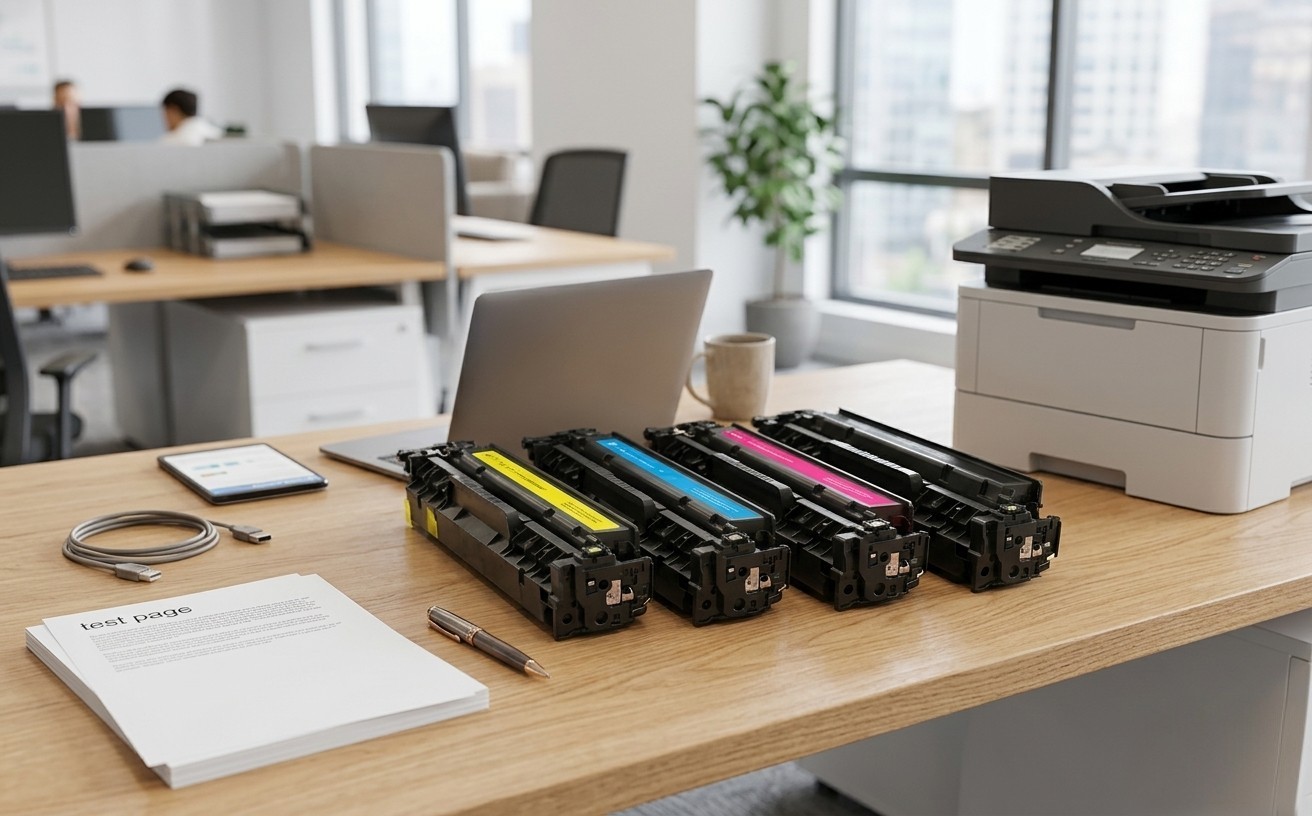
Several factors influence how long a toner cartridge lasts, including:
- The amount of text or graphics printed on each page
- Print density and page coverage
- Whether you’re printing mostly text or image-heavy documents
- Draft versus high-quality print settings
- Printing frequency and workload
For example, a cartridge rated for 3,000 pages assumes approximately 5% page coverage. Printing documents filled with graphics, charts, logos, or photographs uses considerably more toner than printing simple text documents.
That’s why two offices using the same Brother, HP, or Canon toner cartridge may replace it at different times because of the way they use them.
When comparing OEM and compatible cartridges, pay attention to both the advertised page yield and the credibility of the manufacturer to get a better idea.
Find Out: How to Make Your Toner Cartridge Last Longer
Which Printer Toner Cartridge is Right for You?
The answer depends on different users and their printing needs.
If you print occasionally at home, a quality compatible toner cartridge may offer good value while keeping replacement costs manageable.
Students and teachers who regularly print assignments, research papers, or course materials often look for a balance between affordability and dependable print quality. Compatible toner is frequently a practical option for this type of workload.
Small businesses and SMEs usually pay close attention to operating costs. If they print hundreds or thousands of pages each month, reducing the cost per page without sacrificing readability can make compatible cartridges an attractive choice.
Printing shops face a different situation. High print volumes mean toner expenses quickly add up, but customers also expect clean, professional output. Many print businesses use reliable compatible cartridges after confirming that they consistently meet their quality requirements.
Large corporate organizations, financial institutions, healthcare providers, or businesses that require predictable output across multiple printers may still prefer OEM cartridges because of their consistency, manufacturer support, and standardized performance.
Ultimately, the better choice depends on your printing habits, budget, and expectations.